A considered Champagne selection
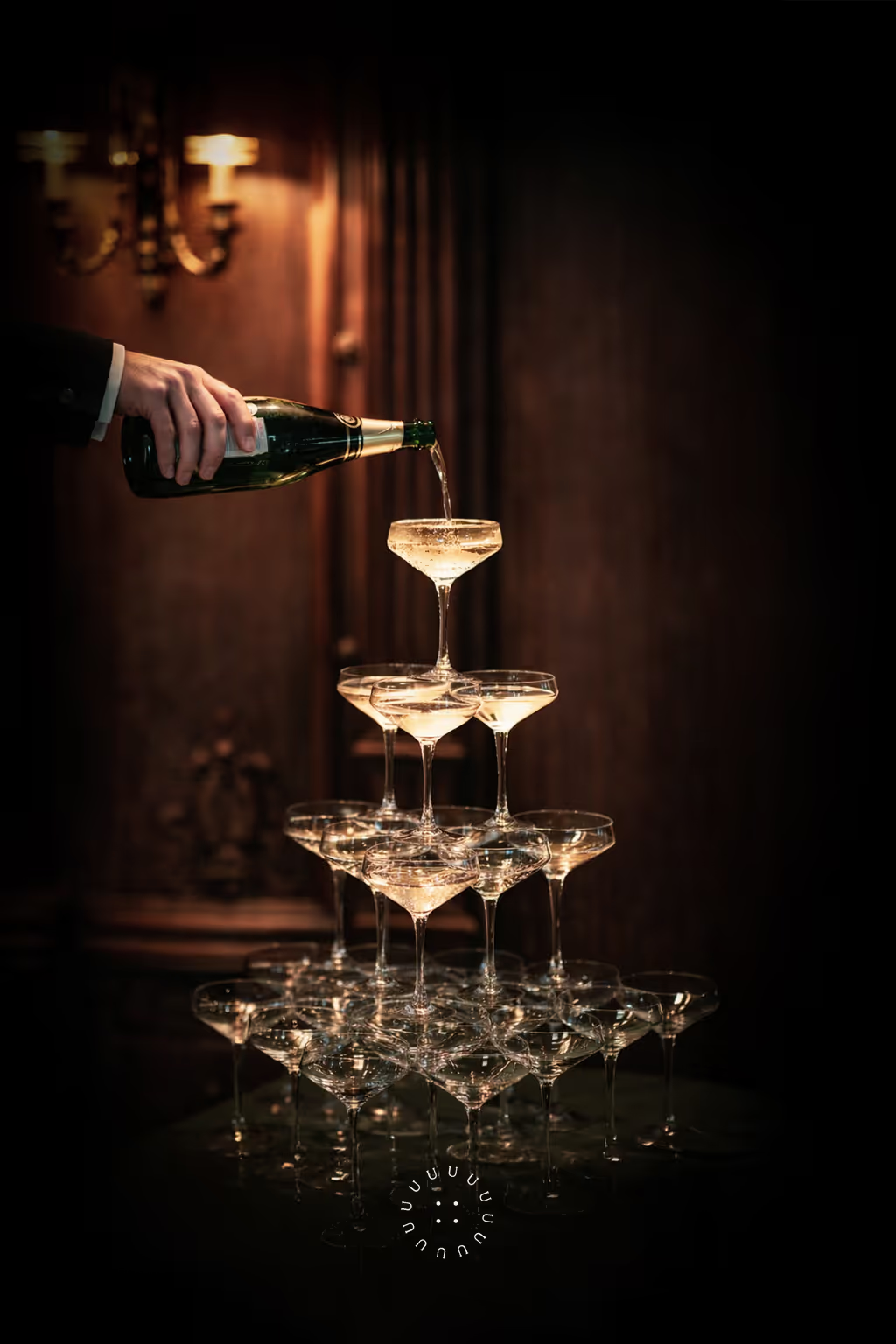
With New Year’s Eve coming up, we picked a few beautiful Champagne houses. Brands with tradition, craft and a clear point of view. Champagne is personal. Taste matters. Budget matters. The moment matters. We’ve added a few bits of knowledge and stories along the way. Nothing heavy. Just enough to casually educate your in-laws or friends at the table.

Dom Pérignon
Dom Pérignon did not literally invent Champagne, but he shaped its philosophy. As a Benedictine monk in the late 17th century, he focused on blending grapes from different vineyards to improve balance and consistency. That thinking laid the foundation for modern Champagne. Today, Dom Pérignon remains vintage only. Every release reflects a single year, built around restraint, precision and patience.
Pol Roger
Winston Churchill famously drank Pol Roger daily, not just on special occasions. He valued its structure and depth and remained loyal to the house throughout his life. After his death, Pol Roger created the Cuvée Sir Winston Churchill in his honour. Powerful, composed and built to age.
Krug
Krug is about complexity without compromise. Hundreds of reserve wines, some more than a decade old, are blended to create depth and consistency. Long ageing is central to the house philosophy. This is Champagne that rewards attention.
Ruinart
Founded in 1729, Ruinart is the oldest Champagne house. Chardonnay sits at the heart of its identity. Their Blanc de Blancs is a reference for purity and calm, often chosen by sommeliers when clarity matters more than power.
Bollinger
High Pinot Noir content, partial oak fermentation and extended ageing define Bollinger’s style. Structured and gastronomic, this is Champagne that comfortably takes the place of wine at the table.
Salon
One village. One grape. One vintage. Only produced in exceptional years and released late. Salon does not explain itself and does not rush. Its Blanc de Blancs is considered one of the purest expressions of Chardonnay in Champagne.
Jacques Selosse
Selosse changed the way Champagne is perceived. Oxidative, expressive and intense, these wines divide opinion, which is often a sign they matter. Loved by collectors, debated by purists.
Agrapart
A favourite among sommeliers. Low dosage, high tension and strong terroir expression. Often poured blind in serious restaurants, where it quietly outperforms much bigger names.
Billecart-Salmon
Known for finesse and consistency. Restrained in style, never loud. Their rosé is widely considered a benchmark among professionals.
Gosset
The oldest wine house in Champagne. Gosset avoids malolactic fermentation, preserving acidity and structure. Direct, precise and uncompromising.
Louis Roederer
Beyond Cristal, Roederer is respected for its vineyard ownership and biodynamic focus. Control over terroir is central to the house’s quality and consistency.
Ayala
Dry, clean and linear. Low dosage long before it became fashionable. Often chosen for the table rather than the spotlight.
Ready to define your style?
Related stories
Soenil Bahadoer
Chef and owner, GEM.
Michiel Kruize
Co-founder, Mima

Carlos Coelho
Sales Executive, Schaap en Citroen